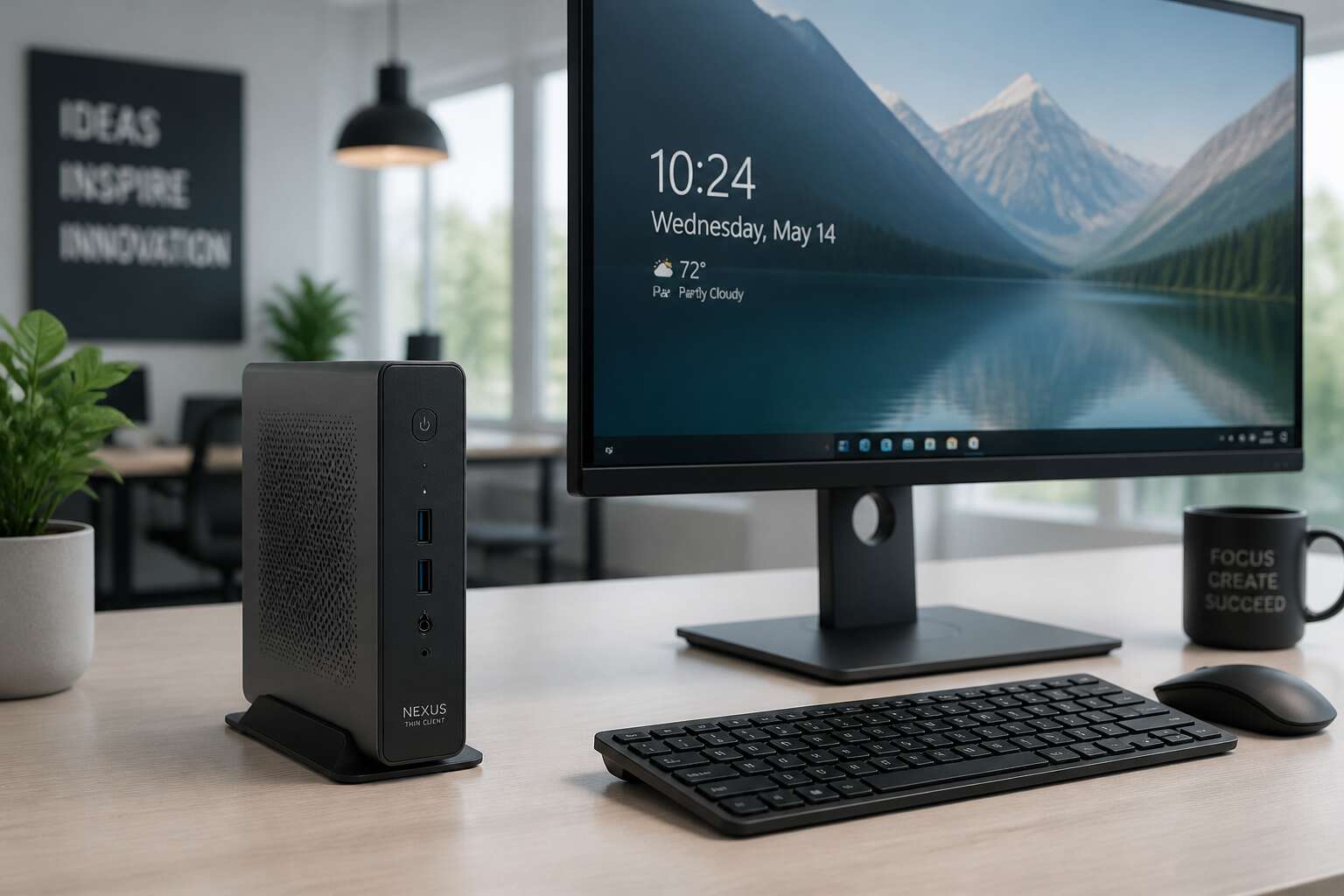
Industry Leaders Worth Knowing
In the dusty heart of the Karoo, a school lab hums with a quiet dignity that belies its cost! That quiet comes from a hard lesson learned about maintenance budgets.
Selecting thin client brands often feels like a gamble, especially when every rand counts. Yet a few names endure because they respect the local reality. I have watched farmers run cattle records on these terminals and librarians manage overdue fines. They do not care about gigahertz. They care about the morning boot-up.
- IGEL, for its tight software longevity.
- NComputing, for its honest multi-user licensing.
- Dell and HP, for the spare parts you can actually find.
Local resellers push many thin client brands, but the proof shows up in the power bill after load shedding. A misstep here means a broken lab for a week, which is a lifetime in a rural timetable. That is the quiet comfort of a machine that simply keeps going.
Key Evaluation Criteria for Selecting a Provider
Choosing a thin client vendor requires more than comparing spec sheets. In South Africa, where power constraints and remote work shape daily IT life, the decision carries real weight. I have seen promising deployments stall because vendors neglected local support. So evaluate how a provider sustains its hardware beyond the initial sale.
Consider management software, endpoint security, and warranty coverage. A supplier struggling to source spare parts in Johannesburg or Cape Town will stall your operations. When shortlisting vendors, weigh these factors:
- Build quality and thermal performance in warm climates
- Centralised management and firmware update cadence
- Local support partners and realistic turnaround times
- Compatibility with existing VDI and cloud services
Reliability beats raw specifications here. The best thin client brands earn trust through consistency, delivering predictable performance without fanfare.
Matching Hardware to Your Deployment Model
In South Africa, the difference between a smooth rollout and a costly failure often comes down to one decision: matching hardware to your deployment model.
A branch office in Polokwane operates very differently from a financial services floor in Sandton. The former might suffer unpredictable internet, while the latter demands strict session persistence. Each scenario pushes you toward a different type of device, and I’ve watched smart teams get this wrong!
Common deployment models include:
- Centralised virtual desktops with persistent sessions
- Shared session hosts for remote teams
- Hybrid setups that mix local processing with central storage
The thin client brands you consider must align with these realities. Some vendors optimise for cloud-hosted desktops, others for on-premise estates, and a few genuinely handle both. The strongest signals come from how each brand’s management console copes with local conditions.
Specialized Players Across Different Industries
Walk into a Johannesburg hospital and you will find thin client brands humming quietly beside the bedsides. Walk into a mining operation in the Northern Cape and you will see the same hardware coated in dust, still refusing to die. Healthcare loves them for security. Logistics loves them because they survive forklift drivers.
I once watched an IT manager in Durban describe his deployment strategy as “set and forget.” That sums up the appeal. With no local storage, nothing breaks and nothing gets stolen. Consider the specialised roles:
- Retail checkouts that run for years without a reboot
- Factory floors where vibration kills ordinary PCs
- Call centres where agents need consistency, not excitement
The strongest thin client brands understand that industries do not want innovation. They want predictability. A box that works at 7am and still works at 7pm. That is the entire game.
Strategic Purchase Considerations
Hardware is the easy part. The strategic purchase of thin client brands goes beyond processor speeds or chassis design. It’s about how the device behaves in your network three years from now, under loadshedding and remote work. The key differences are subtle, so weigh these before you commit:
- Local support and spares, because a dead unit in Cape Town shouldn’t fly to Joburg for repairs.
- The management software, which must handle bandwidth constraints your team feels.
- Image flexibility, so you can shift between VDI and cloud services without replacing the fleet.
Total cost of ownership is the most overlooked metric when comparing thin client brands. A cheaper model that needs constant reconfiguration will consume your IT staff’s hours. The premium option with centralised management might pay for itself in a quarter. Ask about warranty terms and vendor’s roadmap for security patches. I find the answers tell you more than a spec sheet.

0 Comments