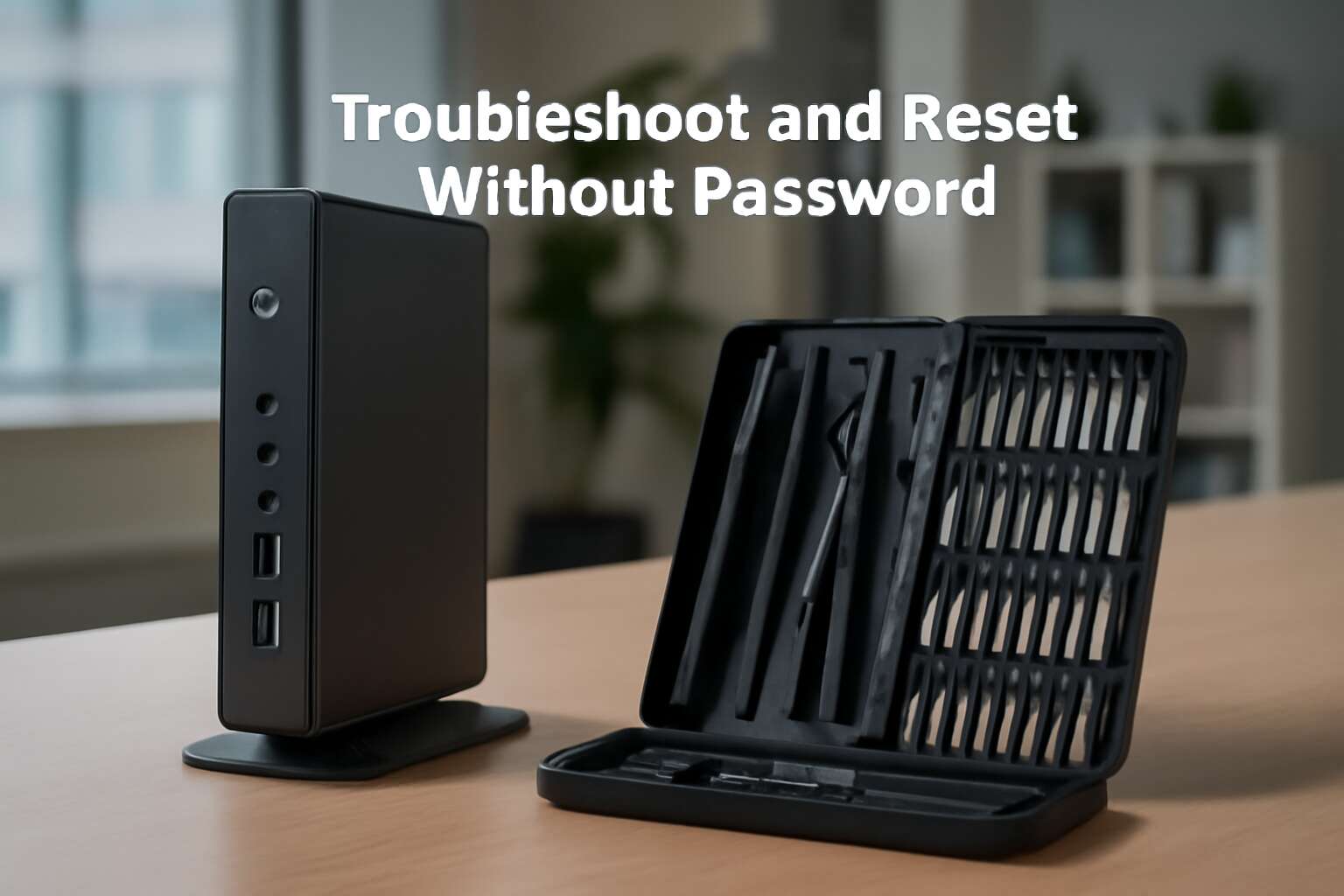
Understanding Thin Clients and Their Security Features
Overview of Thin Clients
Thin clients are often hailed for their streamlined security features, but that simplicity can become a hurdle when it’s time to troubleshoot. Understanding how to reset a thin client without password is essential, especially when access is blocked or credentials are forgotten. These devices are designed to minimize vulnerabilities, yet that same security can make resetting procedures seem opaque to the untrained eye.
Most thin clients operate with embedded firmware that offers multiple layers of protection. While this enhances security, it also complicates tasks like resetting or restoring factory settings. Knowing the underlying architecture helps in navigating options such as hardware reset buttons or recovery modes, which can often be used without a password. Here are some common methods to consider:
- Using physical reset buttons located on the device
- Accessing recovery mode through specific hardware key combinations
- Performing a hardware reset via a BIOS or firmware menu
By understanding these features and options, users can effectively learn how to reset thin client without password, ensuring minimal downtime and maintaining security integrity. This knowledge empowers IT professionals and users alike to handle unexpected access issues with confidence and precision.
Security Measures in Thin Clients
Thin clients are marvels of simplicity and security, crafted to protect sensitive information while streamlining user access. Yet, beneath this veneer of minimalism lies a complex architecture designed to thwart tampering and unauthorized access. Their embedded firmware acts as a fortress, employing multiple security measures that can seem impenetrable to the untrained eye. This layered defense, while essential, can complicate tasks like how to reset thin client without password.
Understanding these security features is crucial. Many thin clients incorporate hardware-based protections, such as tamper-evident seals and secure boot processes, which prevent unauthorized resets. However, they also offer specific pathways to regain control—often through physical reset buttons or recovery modes that don’t require passwords. Recognizing these options is vital for IT professionals and end-users alike. For instance, using hardware key combinations or accessing BIOS menus can often facilitate a factory reset without compromising security.
Common Reasons for Resetting a Thin Client
Understanding thin clients extends beyond their sleek simplicity; it delves into the intricate security architecture that guards vital data. These devices are engineered to minimize vulnerabilities, employing layered protections that can both empower and frustrate when attempting to troubleshoot or reset. For many, the question arises: how to reset thin client without password?
Common reasons for resetting a thin client include software glitches, configuration errors, or preparing the device for a new user. Sometimes, the system becomes unresponsive, or security policies lock out access, leaving users pondering the best way to regain control. Fortunately, many models feature physical reset options or recovery modes, designed precisely to address these scenarios without compromising the device’s built-in security measures.
Knowing where to look—be it a dedicated reset button, a specific key combination, or BIOS access—can make all the difference. These pathways often enable a factory reset, allowing you to restore the device to its original state without the need for a password. Ultimately, understanding how to reset thin client without password demands familiarity with the device’s security features and available hardware options, ensuring a smooth, secure recovery process in any situation.
Preparation Before Resetting Your Thin Client
Gathering Necessary Information – Identify device model, firmware version, and administrator contact
Before embarking on how to reset thin client without password, it’s crucial to gather all the necessary information about your device. This step might seem simple, but missing details can turn a straightforward process into a frustrating ordeal. Knowing your device model and firmware version ensures you follow the correct reset procedures, preventing potential compatibility issues. In rural communities where technology support can be scarce, having this information at hand can make all the difference in restoring your device efficiently.
To streamline the process, consider creating a quick reference list that includes:
- Device model number
- Firmware version
- Administrator contact details or support information
This preparation not only saves time but also reduces the risk of making mistakes when attempting to reset the thin client without a password. It’s a simple yet vital step that empowers you to troubleshoot effectively, ensuring your technology remains a reliable part of your everyday life in South Africa’s diverse landscape.
Back Up Important Data – Ensure critical information is saved before reset
In the delicate dance of technology, sometimes the most vital step is the one that restores order amid chaos. When your thin client becomes unresponsive or locked, knowing how to reset thin client without password can be a game-changer, especially in remote areas where professional support might be scarce. Before diving into the reset process, it’s essential to ensure that all critical data is backed up securely. This safeguard preserves your essential files and configurations, preventing unintentional loss during the reset.
To facilitate a smooth reset, consider creating a checklist that includes your device’s unique details, along with a plan to save important information. Remember, a well-prepared approach can make all the difference, transforming a potentially frustrating experience into a swift recovery. After all, technology is the backbone of progress—when it falters, knowing how to reset thin client without password becomes a vital skill in maintaining resilience across South Africa’s diverse landscape.
Understanding Device Policies – Review security policies and reset restrictions
Understanding device policies is a crucial step before attempting any reset, especially when the goal is to learn how to reset thin client without password. In South Africa’s diverse digital landscape, security policies may vary widely between organizations, reflecting their unique risk profiles and operational needs. Some devices are configured with strict reset restrictions, making it essential to review these policies beforehand. Ignoring them could lead to unintended security breaches or device lockouts, complicating an already delicate situation.
Reviewing your thin client’s security policies involves examining user access restrictions, reset permissions, and firmware control settings. Often, organizations implement layered security that prevents unauthorized resets—key information that must be understood to avoid pitfalls. For example, some policies might explicitly prohibit resets without an administrator’s password, while others provide alternative methods for resetting without compromising security.
To navigate this complex terrain, consider creating a checklist that includes:
- The device’s security policy documentation
- Reset restrictions and permissions
- Available fallback procedures for unresponsive devices
By thoroughly understanding device policies, you prepare yourself to explore options on how to reset thin client without password effectively—saving time and avoiding unnecessary security conflicts. This knowledge forms the foundation for a strategic approach to device management, especially vital in environments where support is limited and quick resolutions are paramount.
Methods to Reset a Thin Client Without a Password
Using Hardware Reset Buttons – Step-by-step guide to factory reset via physical buttons
Sometimes, a thin client refuses to cooperate, and you need to know how to reset a thin client without a password. Hardware reset buttons are often the simplest solution, especially when software options are locked down or inaccessible. These physical buttons are typically located on the back or underside of the device, making them easy to access once you know where to look.
To perform a factory reset via hardware reset buttons, start by powering off the device completely. Next, locate the reset button—often a small, recessed pinhole that requires a paperclip or similar tool to press. Once identified, press and hold the reset button for about 10-15 seconds, then release. This process triggers the device’s internal reset mechanism, restoring factory settings without needing a password.
Some thin clients might have a specific sequence or combination of buttons to initiate the reset. In such cases, consulting the device’s manual or manufacturer’s website can provide tailored instructions. Remember, this method is effective even when you’re locked out of the software interface, making hardware reset buttons a reliable way to learn how to reset thin client without password in urgent situations!
Performing a BIOS/UEFI Reset – Accessing and resetting BIOS settings
In the mysterious realm of thin clients, sometimes the digital gates slam shut, leaving you stranded without a password. But fear not—there’s a secret pathway that bypasses this obstacle: performing a BIOS/UEFI reset. Unlike the physical reset buttons, which are straightforward, accessing the BIOS/UEFI settings offers a deeper level of control that can be the key to unlocking your device.
To embark on this journey, you’ll need to restart the thin client and press a specific key—often F2, F10, or Delete—immediately upon startup. Once inside the BIOS or UEFI menu, navigate to the security or reset options. From here, you can restore default settings, which effectively resets the device without requiring the current password.
Some devices might have a dedicated reset option within BIOS, while others require you to clear the CMOS memory manually. This can be achieved by removing the CMOS battery or using a jumper on the motherboard—an act akin to casting a spell to wipe the slate clean. Remember, this process is an effective way to learn how to reset thin client without password, especially when software access is restricted or locked down.
Resetting via Bootable Media – Creating and using bootable tools for reset
In the realm of digital guardianship, sometimes the keys to your thin client lock away, leaving you stranded in a virtual maze. But fear not, brave explorer—there exists a clandestine pathway that can unlock these digital vaults without the need for a password. One such method is resetting via bootable media, a technique that transforms an ordinary USB drive into a magical talisman capable of restoring your device to its pristine state.
Creating this bootable tool involves selecting the right software—like Rufus or UNetbootin—and loading it with a specialized reset utility tailored for your device. Once prepared, you simply insert the media into your thin client and reboot, summoning the boot menu. From here, you select the USB as your boot source, and the enchanted recovery process begins. This method bypasses the usual security shackles, enabling you to learn how to reset thin client without password with a few simple steps.
- Download a reliable reset utility compatible with your device
- Create a bootable USB using dedicated software
- Insert the media and restart the thin client
- Access the boot menu and select the USB drive
- Follow on-screen instructions to initiate the reset
In this digital quest, knowing how to craft and deploy bootable media is akin to wielding a powerful artifact—restoring access and control, even when traditional paths are sealed tight. The magic lies in understanding that, through this process, you can reset the thin client without a password, unlocking its secrets once more and ensuring your journey continues unimpeded.
Utilizing Manufacturer Default Reset Options – Specific procedures per manufacturer
In the labyrinth of digital guardianship, where security protocols serve as the gates to your vital data, sometimes the keys are misplaced or lost. Yet, within the realm of thin clients, a clandestine avenue exists—one that bypasses the conventional lock and unlocks the device through the artistry of manufacturer default reset options. These procedures, tailored specifically for each maker, are the secret passages that can restore access when the password is a distant memory.
For many models, the process involves a simple yet precise sequence of steps, often involving a hardware reset button or a specific combination of keystrokes during startup. Manufacturers like Dell, HP, and Lenovo each have their unique ritual—such as holding a certain pinhole button or accessing a hidden BIOS menu—enabling you to reset the device seamlessly.
- Consult your device’s user manual for manufacturer-specific reset instructions
It’s essential to understand that these default reset options are designed to be a safety net, a last resort for system recovery. When executed correctly, they can help you learn how to reset thin client without password, restoring the device to its original factory state. This method preserves the integrity of your device, making it an invaluable tool in your digital arsenal.
Reinstalling Firmware to Factory Defaults
Downloading Firmware from Manufacturer – Where to find official firmware updates
When traditional reset methods fall short, reinstalling firmware to factory defaults becomes a powerful solution—especially when wondering how to reset thin client without password. The process begins with downloading the official firmware directly from the manufacturer’s website, ensuring integrity and compatibility. This is crucial because using unofficial or outdated firmware can lead to more complications down the line.
Manufacturers typically provide comprehensive firmware updates tailored for specific models. To locate these, visit the support section of the official site, where firmware downloads are organized by device model and version. Once the correct firmware is downloaded, it can be used to reflash the thin client, effectively restoring it to factory settings. This method is particularly effective when other reset options are locked due to security policies or password restrictions.
Here’s a quick overview of where to find official firmware updates:
- Manufacturer’s official support portal
- Device-specific product pages
- Authorized service centers
Reinstalling firmware is a straightforward yet meticulous process—requiring attention to detail and ensuring the right files are used. It’s a reliable way to reset a thin client without a password, restoring it to its original factory state and resolving persistent access issues.
Creating a Bootable Firmware Flash Drive – Tools and steps involved
Reinstalling firmware to factory defaults is often the most profound method when contemplating how to reset thin client without password. Creating a bootable firmware flash drive is an essential step—an act of technological ritual that demands precision and patience. The process begins with gathering the right tools: a USB drive with sufficient capacity, firmware files downloaded directly from the manufacturer, and a reliable flashing utility.
To craft a bootable firmware flash drive, follow these fundamental steps:
- Download the official firmware from the manufacturer’s support portal, ensuring compatibility with your device model.
- Use a dedicated utility like Rufus or BalenaEtcher to write the firmware image onto the USB drive, transforming it into a bootable medium.
- Configure your thin client to boot from the USB, which often involves accessing BIOS or UEFI settings to prioritize the external device.
This meticulous process is not just about technical execution; it’s about reclaiming control—restoring the device to its original state when traditional reset methods are inaccessible. The act of reinstalling firmware becomes a symbolic gesture of liberation from enforced security restrictions, revealing the core of what it means to truly reset a thin client without password.
Flashing Firmware Safely – Do’s and don’ts during firmware reinstallation
Reinstalling firmware to factory defaults is a delicate dance between precision and patience—an act of technological artistry that can breathe new life into a stubborn device. When contemplating how to reset thin client without password, flashing firmware safely stands as a cornerstone. It’s essential to approach this process with unwavering caution, for a single misstep can turn a sleek device into an inert brick.
A fundamental do is to ensure the firmware you download is authentic and matches your device model exactly. Using counterfeit or incompatible files risks bricking the hardware irreparably. Always verify the checksum provided by the manufacturer before proceeding.
Avoid interrupting the flashing process once it’s begun—patience is your ally here. If power is lost mid-flash, recovery may be impossible, leaving the device permanently disabled. Remember, flashing firmware involves writing directly to the device’s core software, so it’s critical to use a reliable utility like Rufus or BalenaEtcher.
- Never attempt to flash firmware with a low battery charge or unstable power source.
- Do not modify the firmware files or use unofficial patches which could jeopardize the device’s integrity.
By adhering to these guidelines, you can navigate the complex terrain of firmware reinstallation with confidence—unlocking the potential to reset a thin client without a password and restoring it to its original, pristine state.
Bypassing Password Restrictions Legally and Ethically
Contacting Manufacturer or Support – When and how to seek professional help
Sometimes, the need to reset a thin client arises unexpectedly, especially when passwords are forgotten or security restrictions prevent access. In such moments, knowing how to reset thin client without password becomes invaluable, but it’s crucial to approach this process ethically and legally. Contacting the manufacturer or support team is often the safest route, ensuring you stay within legal boundaries and avoid voiding warranties. Manufacturers provide official guidance and tools tailored specifically to your device, making the reset process smoother and more secure.
Before reaching out, gather essential information such as the device model, firmware version, and proof of ownership. These details help support staff provide accurate assistance and prevent unauthorized resets. Remember, tampering with device security settings without proper authorization can lead to legal complications. Therefore, always seek professional help when in doubt, and utilize manufacturer support channels to learn how to reset thin client without password in a manner that preserves device integrity and complies with security policies.
Verifying Ownership and Security Protocols – Ensure authorized reset procedures
In the shadowy realm of digital machinery, security measures are often as impenetrable as ancient fortresses. Yet, when the key is lost or the gatekeeper’s password becomes an unyielding barrier, knowing how to reset thin client without password transforms from a mere technical curiosity into a vital survival skill. The clandestine art of bypassing password restrictions must be approached with the utmost respect for legality and ethics, lest one inadvertently summon chaos or legal repercussions.
Verifying ownership and understanding security protocols serve as the sacred rites before attempting any reset. This ensures that the process remains within the confines of lawful authority, safeguarding both the device’s integrity and the user’s reputation. Manufacturer support channels are the guardians of the correct procedure, offering official guidance that preserves the device’s sanctity and compliance with security policies.
To navigate this labyrinth safely, it is often recommended to follow a structured approach, such as:
- Gather all pertinent information, including device model, firmware version, and proof of ownership.
- Consult official manufacturer resources or support services to explore authorized reset options.
- Ensure that all critical data is securely backed up before proceeding into the unknown.
In this dark dance of digital revival, respecting the boundaries set by security protocols is paramount. Only through authorized, ethical procedures can one truly learn how to reset thin client without password, restoring access without forsaking integrity or legality.
Post-Reset Cleanup and Security Measures
Reconfiguring the Thin Client – Setting up user preferences and network
After successfully resetting a thin client, it’s crucial to perform some post-reset cleanup to ensure the device functions smoothly and securely. Clearing temporary files and cache can prevent lingering issues that may cause system conflicts. Additionally, verifying the device’s security settings helps maintain data integrity and prevents unauthorized access. It’s surprising how often overlooked security measures can leave a thin client vulnerable, especially after a reset.
Reconfiguring the thin client involves setting up user preferences and network settings tailored to your organization’s needs. This process often requires re-entering network credentials and customizing display options. To streamline the setup, consider creating a checklist of essential configurations, such as:
- Network connection details
- User access rights
- Display and input preferences
By ensuring these elements are correctly configured, you restore the device to optimal operational standards. Knowing how to reset thin client without password is just the first step; thorough reconfiguration guarantees security and efficiency in daily use.
Updating Security Settings – Re-establishing security protocols
Once the mechanical hum of the reset process subsides, a delicate phase unfolds—post-reset cleanup and security reinforcements. This is where the silent guardians of your device’s integrity are awakened; clearing temporary files and cache not only smooths the operational flow but also wards off potential conflicts lurking in the shadows. It’s astonishing how often overlooked security measures can leave a thin client vulnerable, especially after a reset that might unintentionally reset security protocols too.
Re-establishing the device’s defenses requires meticulous attention. Updating security settings and re-enabling firewalls, antivirus, and access controls fortifies the device against external threats. Remember, the goal is to restore a fortress, not just a machine. If you’re wondering how to reset thin client without password, know that the process often involves reconfiguring security protocols from scratch. This ensures that unauthorized access remains a distant nightmare, and data remains shielded behind a carefully crafted digital rampart.
For a seamless transition, consider creating a checklist—covering essential elements such as verifying user access rights, resetting network configurations, and re-enabling security policies. This procedural clarity not only expedites the reconfiguration but also ensures no vital security measure is left behind, preserving the sanctity of your organizational data and network integrity.
Ensuring Device Accessibility for Future Use – Best practices for password management
Once the mechanical hum of the reset process subsides, the true challenge begins—restoring the device’s armor and ensuring its accessibility for future use. Post-reset cleanup isn’t just about clearing temporary files; it’s a strategic act of re-establishing security protocols that safeguard sensitive data. By meticulously removing residual cache and potential conflicts, you lay the groundwork for a resilient, responsive thin client. This process exemplifies the importance of vigilant security measures, especially after a reset that might have temporarily loosened defenses.
Best practices for password management become paramount here. It’s crucial to implement robust, unique passwords for each user and administrative account, preventing unauthorized access. For those wondering how to reset thin client without password, the key lies in reconfiguring security settings from scratch—an act that demands careful attention to detail. Creating a checklist that covers network reconfiguration, user rights, and security policy re-enablement streamlines the process and minimizes vulnerabilities. Remember, a well-maintained security framework is the fortress that guards organizational integrity against emerging threats.




0 Comments