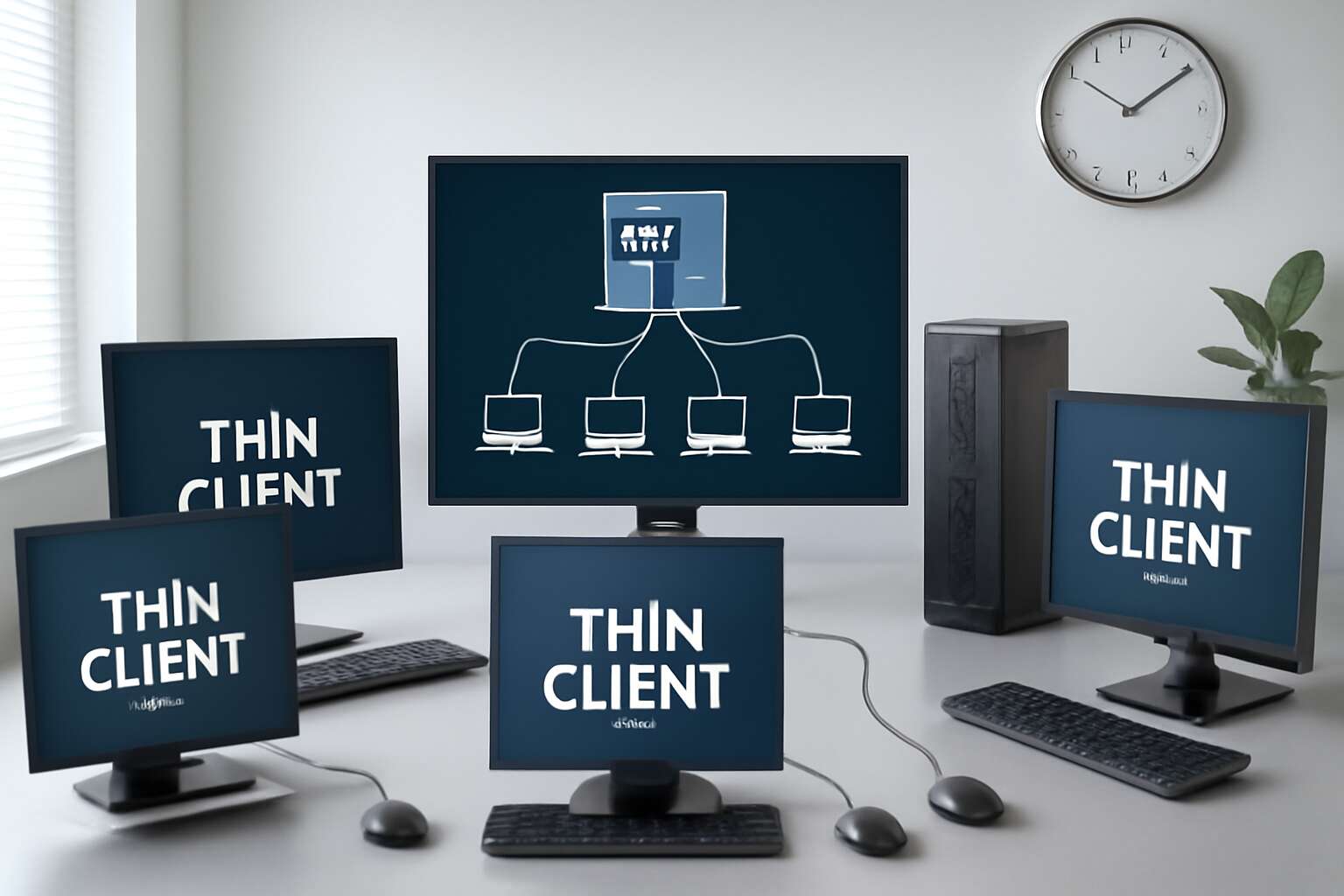
Understanding Thin Client Network Model
Definition and Overview – What is a thin client network model and how does it operate?
In a world where technology often feels distant and complex, the thin client network model offers a breath of fresh air—simple, efficient, and surprisingly resilient. It’s a system designed to streamline operations by shifting most of the processing power away from individual devices, centralizing it instead within a powerful server. This approach not only reduces hardware costs but also enhances security and ease of maintenance. When considering a thin client network model, imagine a single, robust server acting as the brain, while the thin clients become the eyes and hands—access points that rely on the server for all their computing needs.
The operation is straightforward yet sophisticated. Thin clients connect to the server via a network, typically using protocols like RDP (Remote Desktop Protocol) or Citrix. All data processing occurs on the server, with the clients merely displaying the results. This setup makes updates and troubleshooting more efficient, as they happen centrally. For organizations in South Africa seeking a cost-effective, scalable IT infrastructure, understanding the nuances of the thin client network model can be transformative—especially when every rand counts in a competitive landscape.
Key Components – Hardware, software, and network infrastructure involved
The elegance of the thin client network model lies in its understated yet powerful architecture. At its core, this system relies on a harmonious blend of hardware, software, and network infrastructure—each playing a vital role in creating a seamless user experience. The hardware component typically involves lightweight, energy-efficient thin clients that serve as the user’s gateway to the central server. These devices are designed to be durable, affordable, and easy to deploy, making them ideal for organizations seeking cost-efficient solutions in South Africa’s dynamic business landscape.
Complementing the hardware is a sophisticated layer of software that manages the connection protocols and security measures essential for smooth operation. Protocols like RDP (Remote Desktop Protocol) or Citrix facilitate the communication between the thin clients and the central server, ensuring data flows securely and efficiently. The network infrastructure, often the backbone of the entire setup, must be robust enough to handle multiple connections simultaneously without lag or downtime. This includes high-quality switches, firewalls, and reliable internet connectivity—elements that are crucial for maintaining the integrity of the thin client network model.
In some cases, organizations opt for a
- centralized management system
- cloud-based servers
to enhance scalability and ease of maintenance. This layered architecture not only fosters operational resilience but also simplifies updates, troubleshooting, and overall security management—making the thin client network model a compelling choice for many South African enterprises eager to optimize their IT infrastructure with elegance and efficiency.
Historical Development – Evolution of thin client technology over time
The evolution of the thin client network model is a testament to the relentless pursuit of efficiency and simplicity in IT infrastructure. From humble beginnings in the early 1990s, when basic terminal emulators connected users to mainframes, to today’s sophisticated cloud-based solutions, this technology has undergone remarkable transformation. The initial focus was on reducing hardware costs and centralizing data, but as organizations in South Africa and beyond sought increased flexibility, the model adapted rapidly.
Over time, advancements in network infrastructure and software protocols have fortified the thin client network model’s resilience. Innovations like virtualization and cloud computing have made it possible to scale operations effortlessly—an essential trait for South African enterprises navigating a dynamic business environment. The evolution has also introduced layered security measures, ensuring data remains protected even as remote work and mobile access become the norm. Recognizing these strides reveals how the thin client network model continues to evolve, promising a future where simplicity and power coexist seamlessly.
Advantages of Thin Client Network Model
Cost Efficiency – Reducing hardware and maintenance expenses
Optimizing operational costs is a guiding principle in today’s competitive business landscape. The thin client network model stands out as a revolutionary approach, offering significant cost efficiency. By shifting primary processing to central servers, organizations drastically reduce the need for high-end hardware at each workstation. This means fewer expenses on powerful desktops or laptops, which can be a substantial portion of IT budgets.
Additionally, maintenance becomes streamlined and less expensive. Since most software updates, security patches, and troubleshooting are managed centrally, IT teams spend less time and resources on individual devices. This consolidated approach not only cuts costs but also enhances overall system security, reducing the risk of costly breaches.
For businesses seeking to maximize savings, here’s a quick overview:
- Lower hardware procurement costs
- Reduced maintenance and support expenses
- Less need for frequent hardware upgrades
In essence, the thin client network model is a testament to how innovative technology can challenge traditional paradigms—delivering both economic and operational advantages in a single, elegant package. It’s no wonder so many enterprises in South Africa are embracing this model to stay agile and competitive in a rapidly evolving digital world.
Enhanced Security – Centralized data control and security features
In an era increasingly defined by digital vulnerabilities, the allure of enhanced security within the thin client network model becomes impossible to ignore. Centralized data control acts as a fortress, shielding sensitive information from the chaos of dispersed endpoints. Unlike traditional setups where each device becomes a potential entry point for cyber threats, the thin client network model consolidates security measures, making breaches significantly more difficult to execute. This model’s architecture inherently minimizes the attack surface, ensuring that critical data resides securely within a protected data center.
Moreover, the thin client network model simplifies the implementation of advanced security features. Multi-factor authentication, encryption protocols, and real-time monitoring can be managed uniformly across the entire network from a single vantage point. This coordinated approach not only fortifies defenses but also streamlines compliance with South Africa’s evolving cybersecurity regulations. For organizations prioritizing data integrity and regulatory adherence, this model offers peace of mind.
By reducing the number of vulnerable endpoints, the thin client network model transforms security from a reactive chore into a proactive shield. Its ability to centralize data security—alongside features like automatic software updates and security patches—makes it an indispensable asset in today’s high-stakes digital environment. In essence, it’s more than just a cost-effective solution; it’s a strategic imperative for those seeking resilient, future-proof security infrastructure.
Simplified Management – Easy updates, troubleshooting, and scalability
In a world where digital transformation is no longer optional but essential, the thin client network model emerges as a beacon of streamlined efficiency. One of its greatest advantages lies in simplified management—an aspect that often determines the difference between chaos and control in IT operations. With centralized oversight, updates, troubleshooting, and scalability become not just manageable but intuitive processes. This model transforms what was once a complex, time-consuming task into a seamless experience, allowing IT teams to focus on strategic initiatives instead of firefighting.
For example, deploying software updates across multiple thin clients is as easy as pushing a single command from a central server. Troubleshooting is similarly simplified—technicians can remotely diagnose and resolve issues without physically accessing each device. Moreover, the scalability of a thin client network model makes expansion effortless. As organizations grow, adding new endpoints or upgrading existing infrastructure requires minimal effort and cost.
- Centralized control reduces operational overhead.
- Remote management tools streamline routine tasks.
- Quick scalability supports business growth without disruptions.
Ultimately, the thin client network model’s asset lies in its ability to bring order to complexity. It’s a vital component for organizations in South Africa seeking a resilient, future-proof digital environment, where management becomes a strategic advantage rather than a logistical headache. This model exemplifies how technology can serve not just operational needs but also foster innovation and agility in an ever-evolving digital landscape.
Energy Savings – Lower power consumption compared to traditional desktops
In a world driven by the relentless pursuit of sustainability, energy savings have become more than a mere aspiration—they are a necessity. The thin client network model stands as a luminous example of how technology can align with ecological responsibility. Unlike traditional desktops, which guzzle power like a thirsty traveler, thin clients sip energy with graceful restraint. This quiet efficiency not only reduces operational costs but also diminishes the carbon footprint, contributing to a greener South Africa.
By design, thin clients are optimized for low power consumption, making them an ideal choice for organizations seeking to balance performance with environmental consciousness. In practice, this means a significant reduction in electricity bills and a decrease in heat generation—less heat, less cooling, and fewer resources expended. For businesses looking to expand without burdening their power infrastructure, the thin client network model offers a seamless pathway to sustainability.
Moreover, the energy-efficient nature of thin client technology enhances the overall resilience of IT infrastructure. Organizations can enjoy:
- Lower power costs, translating into long-term savings.
- Reduced environmental impact, aligning with global sustainability goals.
- Enhanced operational efficiency, with minimal energy waste.
Embracing the thin client network model is, in essence, an act of technological stewardship—one that champions innovation while safeguarding the planet for future generations.
Challenges and Limitations
Network Dependency – Impact of network reliability on performance
In the heart of rural South Africa, where connectivity can often be unpredictable, the thin client network model faces unique challenges. The reliance on a stable and robust network means that even minor disruptions can significantly impact performance. When the network falters, users experience delays, lag, or complete disconnection from vital applications—disruptions that can hinder productivity and frustrate users who depend on seamless access. This dependency is the Achilles’ heel of the thin client network model, making it crucial for organizations to invest in reliable infrastructure.
Network dependency isn’t just an inconvenience; it’s a critical limitation that can undermine the very benefits this model offers. To mitigate these issues, some organizations implement backup solutions or prioritize bandwidth management. Yet, in areas with inconsistent power supply or limited internet options, the performance of a thin client network model can suffer profoundly, highlighting the importance of resilient network architecture tailored for such environments.
Performance Constraints – Limitations for resource-intensive applications
Despite its many virtues, the thin client network model reveals a critical Achilles’ heel when it comes to performance constraints—particularly in resource-intensive applications. These lightweight terminals excel in streamlining operations and reducing hardware costs, yet their reliance on centralized processing often hampers the execution of demanding tasks. Complex graphics, large datasets, or multimedia editing can challenge the limited local resources, resulting in sluggish responses or outright failure to deliver the expected user experience.
In environments where performance is paramount, organizations may find themselves grappling with the inherent limitations of the thin client network model. The architecture’s dependency on network speed and server capacity becomes painfully apparent, especially when bandwidth is constrained or the server infrastructure is overstretched. For truly resource-heavy applications, this reliance can lead to bottlenecks and degraded productivity, forcing users to wait longer for processes to complete or, worse, to abandon essential tasks altogether.
In such scenarios, the thin client network model’s effectiveness hinges on a carefully calibrated balance—investments in robust infrastructure and perhaps a hybrid approach that leverages local processing power. Without these, the model risks becoming an inefficient conduit rather than the streamlined solution it promises to be. When performance constraints emerge, it’s a stark reminder that the thin client network model, while elegant in theory, demands meticulous planning and resource allocation to truly thrive in demanding operational landscapes.
Compatibility Issues – Software compatibility and customization challenges
One of the most understated hurdles of the thin client network model lies in its compatibility with diverse software applications. While these lightweight terminals are designed for simplicity, they often stumble when faced with customized or specialized software. Organizations aiming for seamless integration find themselves grappling with compatibility issues that can hinder productivity and extend project timelines.
Moreover, tailoring the thin client network model to meet specific operational needs can be a complex puzzle. Customization challenges emerge as a significant obstacle, especially when legacy systems or unique workflows are involved. This scenario demands careful planning and sometimes costly middleware solutions to bridge gaps, making the thin client network model less flexible than initially perceived.
In environments where diverse applications thrive, or bespoke solutions are essential, the compatibility limitations of the thin client network model can become a bottleneck. Compatibility issues are not merely technical nuisances—they can impede business agility and innovation, especially when critical software cannot run smoothly or requires extensive reconfiguration. A hybrid approach or investment in compatible, enterprise-grade thin client solutions may be necessary to overcome these hurdles and unlock the true potential of this architecture.
Initial Deployment Costs – Investment considerations for setup and infrastructure
The initial deployment costs of a thin client network model can be unexpectedly steep, catching organizations off guard. While the promise of long-term savings is enticing, the upfront investment in infrastructure, hardware, and setup can strain budgets. Establishing a robust network backbone, especially in environments where network reliability is inconsistent, requires careful planning and often significant capital expenditure.
In some cases, organizations find themselves needing to invest in specialized middleware or additional hardware to bridge compatibility gaps—an added expense that can erode the anticipated cost benefits. For businesses in South Africa, where network infrastructure varies widely, these initial costs can become a formidable barrier to adoption.
To navigate these financial hurdles, many opt for a phased rollout, carefully assessing where the thin client network model will deliver the greatest ROI. However, without proper planning, the combination of hardware upgrades and infrastructure investments can transform what seemed like a cost-effective solution into a complex financial puzzle.
Implementing Thin Client Network Model
Planning and Design – Assessing organizational needs and infrastructure setup
Implementing a thin client network model requires careful planning and precise design. The first step involves assessing organizational needs—understanding the specific workload, security requirements, and user expectations. This ensures that the thin client network model aligns with business goals and resource availability.
Next, evaluate your existing infrastructure to determine if it can support a shift to thin clients. Reliable network connectivity is paramount; a robust network setup minimizes latency and maximizes performance. For organizations with diverse applications, compatibility issues may arise, making it necessary to analyze software requirements and potential customization challenges ahead of time.
A vital aspect often overlooked is scalability. A well-planned thin client network model should accommodate future growth without hefty additional costs. This involves considering server capacity, network bandwidth, and hardware upgrades, ensuring a seamless transition as your organization expands. Proper planning at this stage lays the foundation for a successful, efficient thin client deployment.
Hardware and Software Selection – Choosing appropriate thin clients and backend servers
Embarking on the journey to implement a thin client network model is akin to forging a legendary weapon—each component must be chosen with precision and purpose. Selecting the right hardware is crucial; thin clients must be robust yet nimble, capable of handling the demands of your unique workload. Behind the scenes, backend servers serve as the enchanted core, orchestrating data flow with seamless efficiency.
To maximize the magic of your thin client network model, consider the following:
- Compatibility with existing software ecosystems
- Scalability to support future expansion
- Security features that protect sensitive data
When it comes to software, lightweight operating systems tailored for thin clients can significantly enhance performance. Opt for solutions that offer centralized management and easy deployment—these are the spells that keep your network agile and resilient. The choice of backend servers, whether blade servers or virtualized environments, determines the backbone strength of your thin client network model, ensuring it can grow and adapt to your organization’s evolving needs.
Deployment Strategies – Step-by-step implementation processes
Implementing a thin client network model requires a strategic approach to deployment that ensures efficiency and resilience. Begin with a comprehensive assessment of your organization’s needs, pinpointing how many thin clients are necessary and what kind of backend servers will support your workload. This step is crucial, as it lays the foundation for a smooth rollout.
Next, focus on the network infrastructure. A robust, high-speed connection is vital—any network dependency can cripple performance. Once the network is solid, proceed with installing and configuring the thin clients, ensuring they are compatible with your existing software ecosystem. Compatibility issues can be a stumbling block, so thorough testing at this stage prevents headaches later.
For the deployment process itself, consider a phased approach—pilot testing on a small scale before a full rollout. This allows you to fine-tune settings and troubleshoot potential issues early. Remember, a well-executed deployment isn’t just about installing hardware; it’s about creating a seamless, scalable environment that can adapt to future demands.
Training and Support – Staff training and ongoing technical support
Implementing a thin client network model isn’t just about hardware—it’s about empowering your team with the right knowledge and ongoing support. Staff training is essential to maximize the benefits of this technology. Well-trained employees can troubleshoot common issues, perform routine updates, and adapt quickly to system changes, reducing downtime and boosting productivity.
Ongoing technical support ensures that your thin client network model remains resilient and secure over time. Regular maintenance, software updates, and troubleshooting are critical to prevent disruptions. Establishing a dedicated support team or partnering with a managed service provider can make a significant difference, especially when dealing with network dependencies that impact performance.
Effective training should cover essential topics such as network security, hardware handling, and software compatibility. Consider implementing a structured program that includes hands-on sessions and reference materials, making sure staff are comfortable with the thin client environment. Remember, a knowledgeable team is your best defense against unforeseen issues and a vital part of a successful thin client network model.
Use Cases and Industry Applications
Educational Institutions – Classroom labs and campus-wide deployments
In the dynamic landscape of South African educational institutions, the thin client network model emerges as a beacon of innovation and efficiency. Imagine a bustling classroom where each device, instead of being a standalone fortress of technology, becomes a mere window into a centralized universe of data and applications. This model is particularly transformative for classroom labs, where the need for rapid updates, security, and cost management is paramount.
Educational institutions harness the power of the thin client network model to facilitate campus-wide deployments that are both scalable and secure. By centralizing computing resources, schools can effortlessly manage multiple terminals, ensuring that students and staff experience seamless access to learning tools without the chaos of incompatible software or hardware failures. Such deployments foster an environment where learning is unhindered by technical limitations, embodying a future where education and technology dance in harmony.
Healthcare Sector – Patient data management and secure access
In the intricate tapestry of South African healthcare, where precision and security are paramount, the thin client network model stands as a guardian of sensitive information. Imagine a bustling hospital ward where every terminal acts as a vigilant sentinel, seamlessly accessing and managing patient data through a centralized system. This innovative model transforms healthcare environments into bastions of efficiency and safety, reducing vulnerabilities associated with traditional computing setups.
For healthcare providers, the thin client network model offers a sophisticated solution for secure access to patient records, diagnostic tools, and treatment plans. Its ability to provide a unified interface simplifies the management of vast quantities of data while maintaining airtight security. This is especially crucial in a landscape where patient confidentiality is sacrosanct and regulatory compliance is non-negotiable.
Furthermore, the model’s scalability ensures that as hospitals grow or technology advances, the infrastructure can adapt effortlessly. The deployment of thin clients enables healthcare facilities to assign resources dynamically, ensuring that doctors and nurses access vital information without delay. The model’s inherent energy efficiency and centralized control make it a compelling choice for modern South African hospitals seeking to innovate without sacrificing security or operational integrity.
- Real-time access to patient data
- Enhanced security for sensitive health information
- Streamlined management of healthcare applications
- Cost-effective expansion of hospital IT infrastructure
In essence, the thin client network model isn’t just a technological advancement; it’s a vital enabler in the quest for healthcare excellence. By harnessing its power, South African medical institutions can elevate their standards of care, ensuring that every patient receives the attention and confidentiality they deserve.
Corporate Environments – Call centers and remote workforce solutions
In the bustling corridors of South African call centers and the ever-expanding realm of remote workforce solutions, the thin client network model proves to be a game-changer. With businesses increasingly relying on agile, secure, and cost-effective IT infrastructures, thin clients emerge as the unsung heroes behind seamless operations. Imagine a call center where agents access customer data in real time, with minimal downtime and maximum security — all facilitated by a centralized backend that keeps information safe and updates effortless.
For organizations striving to optimize their remote workforce, the thin client network model offers unparalleled flexibility. It enables staff to connect from diverse locations without sacrificing performance or security. Moreover, deploying thin clients simplifies IT management, allowing teams to focus on core business activities rather than troubleshooting hardware issues. As a result, companies can scale their operations rapidly, ensuring that every call is handled with precision and confidentiality.
In essence, the thin client network model isn’t merely a technological convenience; it’s a strategic asset for forward-thinking enterprises. Whether supporting a burgeoning call center or empowering a remote workforce across South Africa’s diverse landscape, this model fosters resilience, security, and efficiency at every level.
Government and Public Sector – Secure public service access
In the realm of public service, where transparency and security are paramount, the thin client network model emerges as a beacon of innovation. Governments across South Africa are increasingly adopting this technology to craft resilient, secure, and efficient digital environments for their citizens. Imagine a bustling government office where every terminal is a gateway to centralized data—robust, yet delicately shielded from external threats. The thin client network model transforms this vision into reality, enabling seamless access to sensitive information without compromising security.
By leveraging a thin client network model, public institutions can ensure that data remains centrally controlled, reducing vulnerabilities and simplifying compliance with stringent security protocols. This model facilitates easy software updates and configurations, meaning that public servants spend less time troubleshooting and more time serving their communities. Moreover, its energy-efficient design aligns perfectly with South Africa’s pressing need for sustainable and cost-effective solutions. The thin client network model not only enhances operational efficiency but also fortifies the foundation of public trust in digital governance.
For government agencies aiming to uphold the highest standards of data integrity and accessibility, the thin client network model stands as a strategic pillar. Its capacity to deliver secure, reliable, and scalable public service access makes it an indispensable tool in the ever-evolving landscape of digital transformation. With every deployment, this model weaves a tapestry of resilience, ensuring that the wheels of government turn smoothly, securely, and sustainably.
Future Trends in Thin Client Technologies
Integration with Cloud Computing – Hybrid models leveraging cloud services
As the digital landscape continues to evolve, the future of the thin client network model gleams with promise, especially when seamlessly integrated with cloud computing. Imagine a hybrid ecosystem where data flows effortlessly between local devices and expansive cloud services, creating a symphony of resource accessibility and flexibility. This convergence not only enhances operational agility but also paves the way for scalable, cost-effective solutions that adapt to rapid organizational growth.
Cloud integration transforms the thin client network model into a versatile powerhouse, enabling organizations to leverage cloud services for storage, processing, and application delivery. This hybrid approach fosters an environment where data security and compliance are fortified through centralized management, while end-users enjoy a smoother, more responsive experience. As industries lean into this innovative frontier, the potential for streamlined workflows and resilient infrastructure becomes a defining trait of modern thin client deployments.
- Enhanced scalability allows organizations to expand their thin client network model without the stress of hardware limitations.
- Cloud-based management simplifies updates, troubleshooting, and security protocols, reducing downtime and operational costs.
- Hybrid models facilitate remote access and business continuity, especially vital for South African enterprises navigating diverse connectivity landscapes.
Advances in Hardware – Next-generation thin client devices
As technology advances at an unprecedented pace, the future of the thin client network model is poised for remarkable transformation. One of the most exciting trends is the development of next-generation thin client devices, designed to be more powerful, energy-efficient, and adaptable than ever before. These devices are increasingly equipped with high-performance processors, enhanced graphics capabilities, and improved connectivity options, enabling them to handle more resource-intensive applications without compromising speed or security.
In addition, hardware innovations are driving the evolution of thin client network model toward a more versatile and resilient infrastructure. Manufacturers are now focusing on ultra-lightweight designs that retain durability, while incorporating features such as integrated AI for smarter management and troubleshooting. This enables organizations to deploy scalable solutions that meet diverse operational demands with minimal hardware overhead.
Some industry leaders advocate a move toward modular components, allowing businesses to customize their thin client setups precisely to their needs. This approach not only bolsters compatibility with a wide array of enterprise software but also ensures future-proofing as new technologies emerge. With these advances, the thin client network model will continue to adapt, offering a compelling blend of efficiency and performance that aligns with South Africa’s digital transformation ambitions.
Security Innovations – Enhanced protection features and protocols
As digital landscapes evolve rapidly, security innovations in the thin client network model are becoming paramount. Organizations across South Africa are increasingly concerned about safeguarding sensitive data amidst rising cyber threats. Future trends point towards the integration of advanced protection features that make unauthorized access nearly impossible.
One promising development is the deployment of multi-layered security protocols embedded directly into thin client devices. These include encrypted communication channels, secure boot processes, and real-time threat detection. Such measures ensure data remains protected, even if the network experiences vulnerabilities. Moreover, manufacturers are exploring hardware-level security enhancements, like Trusted Platform Modules (TPM), to bolster resilience against cyber-attacks.
- End-to-end encryption for data in transit and at rest
- Biometric authentication integrated into thin client devices
- Automated security patching and firmware updates to address emerging threats
These innovations are essential for organizations seeking a reliable, secure thin client network model that aligns with South Africa’s digital transformation goals. As threats become more sophisticated, so too must the protection mechanisms that guard critical data and ensure operational continuity.
AI and Virtualization – Emerging technologies improving efficiency and user experience
Emerging technologies such as artificial intelligence (AI) and virtualization are revolutionizing the landscape of the thin client network model, promising unprecedented levels of efficiency and user experience. AI-driven algorithms can optimize resource allocation in real-time, allowing for smarter workload distribution and predictive maintenance—an essential feature for South African organizations navigating a dynamic digital environment. Meanwhile, virtualization extends the capabilities of thin clients by creating flexible, scalable virtual desktop environments that can be tailored to diverse operational needs.
In particular, AI enhances security protocols by detecting anomalies and potential threats more swiftly than traditional methods. Virtualization, on the other hand, simplifies application deployment and updates, making it easier to maintain a consistent user experience across multiple sites. Together, these innovations are paving the way for a more resilient and adaptive thin client network model, one that aligns with the nation’s push towards broader digital transformation initiatives.
Furthermore, the integration of cloud computing within the thin client network model catalyzes a hybrid approach—combining on-premises infrastructure with cloud resources. This synergy enhances scalability and reduces latency, which is vital for South Africa’s expanding digital economy. As these technologies become more sophisticated, the potential for enhanced security, streamlined management, and cost-efficiency grows exponentially, reinforcing the importance of staying ahead in the realm of thin client network model advancements.




0 Comments