
Understanding thin client technology landscape
What is a thin client and how it works
Power, security, and seamless access — three threads weaving through South Africa’s office tech decisions! In SA offices, hardware costs and security pressures are shaping IT strategy; one study notes that 60% of CIOs now consider thin client solutions a smarter hardware bet. For businesses weighing the move to thin client companies, the landscape is a mix of mature platforms and nimble startups.
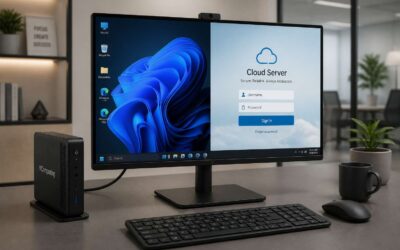
Understanding how these endpoints work is essential. A thin client behaves as a light display and input device, while most processing runs on a central server or cloud workspace. Data stays on the server, reducing endpoint management and patch chaos. Key considerations include:
- Centralized management
- Robust security and data control
- Adaptive user experience across sites
Key benefits for modern organizations
<pUnderstanding the thin client technology landscape reveals a mix of mature platforms and nimble startups, tailored for SA offices juggling budget pressures and security worries. For organisations weighing the shift among thin client companies, the winning angle is centralized oversight, robust data governance, and a seamless app experience across sites.
- Lower hardware costs and simpler refresh cycles
- Stronger security with data staying on server
- Consistent user experience across branches and remote sites
In South Africa, where hybrid work is standard and connectivity varies by region, choosing the right thin client approach means aligning with cloud workspace partners and local support. The landscape rewards suppliers that deliver reliable, easy-to-manage endpoints while keeping patches and updates under control, not chaos!
Common deployment models: on-premises vs cloud-hosted
Across South Africa, lean endpoints are reshaping budgets, with early adopters reporting up to 30% lower total cost of ownership. The technology landscape for thin client companies is shifting toward flexibility, security, and simplicity that suits dispersed teams.
Deployment models split into on-premises and cloud-hosted, each with distinct rhythms. On-premises delivers data sovereignty and lower latency for tightly controlled environments; cloud-hosted reduces maintenance and scales with demand. A hybrid approach often offers the best balance for mixed sites and mobile workforces.
- On-premises: control, latency, and local compliance.
- Cloud-hosted: scalable resources, simplified updates, and remote access.
For South African organisations navigating regulation, funding cycles, and talent availability, these options shape how customers engage with this sector.
Performance considerations and hardware requirements
Across South Africa, lean endpoints are reshaping budgets, with early adopters reporting up to 30% lower total cost of ownership. For thin client companies, this shift feels like slipping into a lighter, swifter world!
Performance hinges on balance: streaming desktops, snappy logins, and protecting users from jitter on diverse networks. Key performance touchpoints:
- Network bandwidth and latency
- Graphics and multimedia rendering
- Centralized management and security updates
Hardware requirements draw a line between fantasy and function: energy-efficient endpoints, modest GPU acceleration where needed, and scalable server capacity to host virtual desktops.
In South Africa, this often means compact devices, robust power, and dependable cooling.
From on-prem to cloud-hosted, this sector must align with local regulations, funding cycles, and a talent market that values resilience and imagination as much as uptime.
Industry adoption trends and forecasts
In South Africa, lean endpoints are not merely budget helpers; they’re strategic posture. Early adopters report a 27% drop in helpdesk tickets as deployments roll out. Thin client companies fuse simplicity with security, proving performance can ride on modest hardware when the management layer is sharp. From my desk, the landscape feels like a chessboard—each move toward cloud or on-prem is deliberate, not decorative!
Adoption trends tilt toward hybrid models, balancing centralized control with edge rendering. Forecasts foretell steady growth as SA regulations tighten and budgets reset.
- Public sector modernization driving compliant, remote-ready desktops
- SMEs adopting scalable cloud desktops for flexible staffing
In this climate, resilience and human-centric design are the names of the game, guiding investments in security and user experience.
Leading vendors and providers in the thin client space
Top vendors for enterprise thin clients
Across South Africa’s hybrid workplaces, thin client companies signal a quiet revolution: security, simplicity, and predictable costs that bolster boardroom confidence. Security is a posture, not a feature, and these architectures make that truth tangible.
Leading vendors and providers in the thin client space bring durable hardware, centralized management, and cloud-ready security that scales from SMBs to large enterprises. The lineup prioritizes interoperability, long support life, and local service ecosystems that matter for South African teams.
Top vendors for enterprise thin clients in this landscape include:
- Dell
- HP
- Lenovo
- Fujitsu
- IGEL
For the South African market, these platforms translate into simplified fleet management, stronger governance, and resilient endpoints across offices and remote sites—the quiet backbone of modern work.
How to compare vendors: features, support, pricing
Security is a posture, not a feature, and that truth guides every choice in South Africa’s hybrid workplaces. Leading vendors like Dell, HP, Lenovo, Fujitsu, and IGEL stand out as the backbone for scalable, reliable endpoints across campuses and remote sites.
When comparing vendors, focus on features, support, and pricing. Do you gain centralized management, cloud-ready security, and straightforward OS updates? Is there a robust local support network with clear SLAs that keep devices healthy across sites?
- Centralized management and scalability
- Security posture and update cadence
- Transparent pricing and total cost of ownership
For South Africa’s teams, these thin client companies translate into simplified fleet governance and resilient endpoints that keep workloads flowing—whether in the boardroom or at a remote site.
Vendor case studies: success stories
Across South Africa’s hybrid workplaces, endpoint agility is a superpower. A recent survey showed 68% of staff operate through low-power devices, shaving helpdesk tickets and speeding logins. Leading thin client companies such as Dell, HP, Lenovo, Fujitsu, and IGEL are the backbone behind scalable, secure endpoints—from lecture halls to remote clinics.
Vendor case studies illustrate these outcomes:
- University campus deployment cut imaging time by 70% and simplified staff provisioning.
- Regional clinics extended reach with reliable access to patient records, boosting uptime and patient care.
- Corporate branch networks cut IT maintenance time by 40% through centralized management and cloud updates.
For South Africa, these narratives translate into governance simplicity and resilient endpoints that keep workloads flowing—from classrooms to remote sites.
Open-source and hybrid options to consider
Across South Africa’s hybrid workplaces, the quiet power of a well-chosen thin client is felt in every login. A recent survey showed 68% of staff operate through low-power devices, shaving helpdesk tickets and speeding access. Leading thin client companies translate that constraint into governance-friendly, scalable endpoints that stay resilient from lecture halls to remote clinics. Open-source and hybrid options invite prudent experimentation without locking you into a single path.
- Open-source thin client architectures that adapt to local policy and compliance needs
- Hybrid deployments blending on-site appliances with cloud-based management and updates
- Vendor-agnostic management consoles that unify security, imaging, and provisioning across devices
Together, these choices empower South Africa’s institutions to balance cost, control, and convenience without sacrificing reach or security.
Migration and integration considerations when switching vendors
Across the shadowed lanes of IT, 68% of organisations rely on lean endpoints to cradle their workflows. In the world of thin client companies, the drama unfolds in governance and imaging—where a carefully chosen vendor can turn a login into a measured breath. Migration decisions become rituals, preserving control while inviting scalable grace.
When switching vendors, map imaging, profiles, and identity against existing security policies and cloud or on-prem plans. Check driver compatibility, peripheral support, and firmware lifecycles. Review SLAs and patch cadence; uptime is a quiet pact with every user in South Africa’s hybrid workplaces.
- Unified imaging and provisioning alignment
- Data, settings, and user profile migration plan
- Pilot, rollback, and cutover strategies
These considerations shape partnerships with leading thin client companies that offer vendor-agnostic management and durable migration services.
Use cases by industry and scenario
Remote work and education use cases
In South Africa, 65% of IT leaders report faster onboarding and tighter security when desktops are powered by thin client technologies provided by thin client companies.
Use cases by industry and scenario illuminate how distributed work and learning adapt without sprawling hardware. Consider these examples:
- Remote work: secure virtual desktops accessible from home or regional offices
- Education: classroom labs and e-learning powered by centralized, easy-to-manage endpoints
- Finance: compliant access to core applications with centralized patching and audit trails
- Healthcare: patient data handling on lightweight terminals with strict access controls
Whether in government service kiosks or retail branches, the approach remains the same: lean endpoints, a robust back-end, enabling remote work and education.
Healthcare, finance, and government deployments
South Africa’s IT leaders are whispering a quiet truth: 65% report faster onboarding and tighter security when desktops run on thin client technologies. In this new normal, thin client companies thread lean endpoints through healthcare, finance, and public service, keeping data safe while work and learning remain fluid.
Healthcare deployments use lightweight terminals to handle patient data with strict access controls, enabling clinicians to pull records from wards, clinics, or telehealth hubs without overburdening the network.
Finance deployments emphasize compliant access to core applications, with centralized patching and auditable activity trails that satisfy governance while letting branches and remote offices stay productive.
Government deployments extend public services through kiosks and shared terminals, delivering reliable access to citizen information and services at scale, even in rural communities.
Edge computing and branch office deployments
Edge computing isn’t a buzzword for thin client companies—65% of SA IT leaders report faster onboarding when desktops run on thin client technologies, and security tightens in the process. The edge isn’t a gimmick; it’s a practical seam where speed meets vigilance. “The edge makes every desk feel closer to the data,” a CIO notes, and that sentiment carries weight.
Use cases by industry unfold through edge computing and branch office deployments, each sector writing its own playbook:
- Retail: edge-enabled kiosks, responsive checkout, and digital signage that weather peak hours
- Manufacturing: frontline dashboards and QA terminals that stay synced as lines move
- Education: campus labs and libraries stay accessible even when central systems hiccup
For remote branches and distributed campuses, thin client deployments streamline IT, centralize policy, and keep apps lively where bandwidth is scarce. For remote branches, thin client companies extend their reach, delivering consistent experiences regardless of location.
The movement favors lean endpoints that blend reliability with humane usability, turning the edge into a quiet engine of everyday resilience.
Virtual desktop infrastructure and DaaS alignment
Across South Africa, 65% of IT leaders report faster onboarding when desktops run on thin client technologies, and security tightens in the process. The edge isn’t a gimmick; it’s a seam where speed meets vigilance.
Virtual Desktop Infrastructure (VDI) and DaaS align to centralize policy and keep apps lively even where bandwidth is scarce. For distributed campuses and remote branches, these architectures deliver consistent experiences without sacrificing governance.
Key alignment factors for use cases by industry include:
- Latency-aware design and WAN optimization
- Central image management and automated patching
- Data sovereignty, encryption, and compliance with SA regulations
Thin client companies weave this quiet engine of resilience across Retail, Manufacturing, and Education.
Buying guide and procurement strategies
How to define your requirements (security, latency, scalability)
Latency is the silent antelope in your network’s savannah—swift, elegant, and easily unseen until it’s not. In South Africa’s hybrid work landscape, thin client companies must define buying criteria early: security, latency, and scalability become compass points before you touch a device or vendor brochure.
To define these requirements, start with a security baseline, propose acceptable latency, and forecast scale across devices and users. The following checkpoints help structure procurement conversations so you don’t chase features, but outcomes:
- Security posture: encryption, authentication methods, key management, and incident response readiness.
- Latency tolerance: acceptable round-trips, remote session responsiveness, and edge access options.
- Scalability and licensing: future user growth, centralized management, and flexible deployment models.
With this framework, thin client companies align procurement to outcomes, not buzzwords.
TCO and ROI analysis for thin clients
“We don’t buy devices; we buy outcomes,” a seasoned CIO once told me, and that sentiment anchors every procurement conversation in South Africa’s hybrid workplaces. The buying guide here translates risk into numbers, guiding thin client companies toward durable, strategy-aligned decisions.
To distill value, run a TCO and ROI analysis that captures upfront investments, ongoing costs, and the productivity lift. Frame the numbers around time-to-provision, incident reduction, and energy use, not feature lists alone.
- Hardware and image lifecycle costs
- Software licensing and support fees
- Maintenance, training, and upgradeability
When these calculations anchor vendor discussions, procurement moves from chasing features to securing outcomes. This disciplined approach is what thin client companies rely on to justify every rand and improve alignment with business goals.
Licensing models and support terms
In South Africa’s hybrid workplaces, provisioning cycles tie up nearly 40% of IT time. Buying guide: we measure value by outcomes, not gadgets. For thin client companies, the license choice you make today shapes security, upgrades, and operational risk!
Licensing models and support terms matter. Here are common options that shape cash flow and uptime:
- Per-user vs per-device licensing with portability considerations
- Subscription vs perpetual licenses, renewal cadences, and included updates
- Vendor SLAs, support tiers, and deployment commitments (on-site or remote)
For thin client companies, negotiating licensing terms that align with TCO and ROI is crucial. Seek predictable pricing, clear upgrade paths, and transparent data-security commitments.
RFP checklist and vendor evaluation process
In South Africa’s hybrid workplaces, provisioning cycles tie up nearly 40% of IT time. This buying guide measures value by outcomes, not gadgets, and for thin client companies, licensing today shapes security, upgrades, and risk. A careful procurement lens is a strategic lever for uptime and governance.
RFPs and vendor evaluations start with a concise checklist. Consider these criteria:
- Define requirements and success metrics up front (security, latency).
- Ask for upgrade, maintenance, and renewal cadences.
- Demand transparent data protection and regulatory compliance.
A solid vendor evaluation process translates into a fair comparison table: total cost of ownership, implementation timelines, support SLAs, and roadmap alignment. An explicit RFP checklist harmonizes vendor responses with your security posture and operational goals, keeping governance front and center.
Implementation timelines and risk management
In South Africa’s hybrid offices, procurement must move with the tempo of change. The buying guide proves its worth by outcomes, not gadgets, and for thin client companies, licensing now shapes security, upgrades, and risk. A careful lens on cost, speed, and governance can unlock steady uptime across branches.
Implementation timelines reverberate through every project phase. Align milestones with real-world workloads, document dependencies, and earmark data protection and latency expectations. A disciplined risk management approach—identifying single points of failure, scanning for regulatory gaps, and planning rollbacks—keeps your migration graceful in a continent of rapid change.
When procurement becomes strategy, the journey through thin client companies transforms from friction to fidelity—delivering predictable performance while safeguarding governance and user experience.
- Define requirements and success metrics
- Outline upgrade, maintenance, renewal cadences
- Specify data protection and regulatory compliance
Security, management, and lifecycle considerations
Centralized management and monitoring tools
Cyber threats don’t clock out, and in South Africa’s distributed offices, endpoints can become the pivot point for a breach in minutes. For thin client companies, centralized control isn’t a luxury—it’s a shield that keeps users productive and data protected, even as branch networks stretch across cities.
Security starts at the device edge and flows inward through a single pane of glass. Centralized management and monitoring tools allow rapid patching, enforce encryption, and limit user changes to the device firmware.
- Centralized patch and firmware management
- Enforced encryption and MFA-based access
- Audit trails and real-time anomaly alerts
Lifecycle discipline matters as much as security! Asset tagging, provisioning, regular decommissioning, data sanitization, and reallocation decisions keep a fleet lean and compliant across sites.
Centralized monitoring delivers visibility, helping teams forecast needs, reduce risk, and keep operations humming across diverse environments.
Data security, device lockdown, and access controls
In South Africa’s distributed offices, security begins at the device edge, where endpoints stand guard like quiet sentinels. For thin client companies, strict access controls and MFA-based authentication keep lines from crossing, while device lockdown and firmware integrity checks stop intruders at the door—before they touch data across the network.
- Data-at-rest and in-transit encryption with centralized key management
- MFA-based access and device lockdown with role-based controls
- Audit trails and real-time anomaly alerts to surface threats instantly
Lifecycle discipline matters as much as security—asset tagging, provisioning, decommissioning, data sanitization, and smart reallocation keep fleets lean and compliant across sites.
Centralized monitoring delivers visibility, helping teams forecast needs, reduce risk, and keep operations humming across diverse environments—no matter how far data travels.
Firmware updates, patch management, and compliance
Security begins at the device edge. In South Africa’s distributed offices, every endpoint acts as a quiet sentinel, and for thin client companies, firmware integrity and controlled access form the first line of defense. A recent study shows up to 78% of data breaches involve the endpoint, underscoring why robust encryption, tamper-evident firmware, and secure boot are non-negotiable in a dispersed environment.
Key practices to enforce lean, compliant fleets include:
- Firmware updates delivered automatically with verified signatures to ensure integrity;
- Patch management that enforces baseline configurations across sites and devices;
- Compliance alignment with POPIA and industry standards through centralized policy enforcement.
Lifecycle discipline, from asset tagging to secure decommissioning and data sanitization, keeps budgets predictable and audits clean. Centralized monitoring then forecasts capacity, minimizes risk, and maintains performance as data moves between branches and the cloud.
End-of-life planning and device disposal
Edge risk is real: in distributed South Africa offices, up to 78% of data breaches begin at the endpoint. For thin client companies, security starts at the device and threads through every branch, cloud link, and login.
Lean fleet management hinges on disciplined lifecycle practices. Tamper-evident firmware, encrypted boot, and verified updates keep trust intact. A small, well-tagged estate is easier to govern across sites, with baseline configurations enforced and a calm retirement of aging assets.
- Asset tagging and inventory
- Secure decommissioning and data sanitization
- Responsible disposal and recycling
End-of-life planning and device disposal close the loop, protecting data and the brand. Retirement becomes stewardship, preserving performance and privacy as the network grows.
Performance optimization and user experience tuning
In distributed South Africa offices, up to 78% of data breaches begin at the endpoint, a hard-edged reminder that security starts with the device and threads through every branch, cloud link, and login. For thin client companies, resilience is baked into the hardware and the workflow.
Management and lifecycle discipline keeps this architecture coherent: a lean, well-tagged fleet, centralized configuration, and a measured approach to retirement protect privacy and the brand. Identity, firmware provenance, and update verification become governance levers that prevent drift across sites.
Performance optimization and user experience tuning matter as much as security. Users notice boot times, latency, and smoothness when moving between offices. To shape this experience, consider lightweight rendering, adaptive caching, and roaming profiles that stay fast and predictable across networks.
- Adaptive bandwidth-aware rendering
- Predictive caching and pre-warmed sessions
- Seamless cross-site roaming with persistent settings



0 Comments