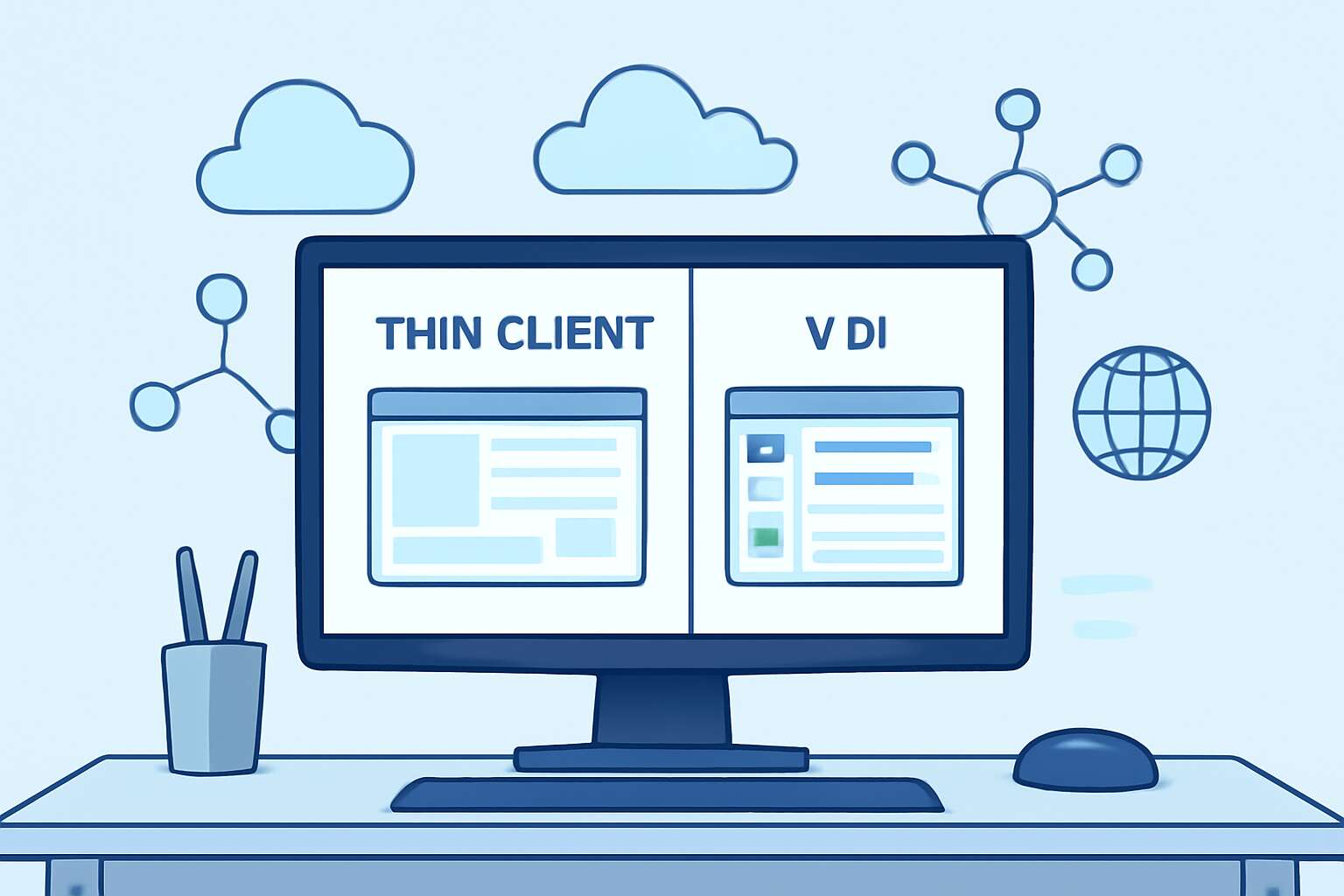
Understanding Thin Clients and VDI: Core Concepts
Understanding Thin Clients and VDI: Core Concepts
In South African offices, the debate of thin client vs vdi is less about gadgets and more about the texture of daily work. A sharper quip from a local IT director captures the point: speed is surprising when latency is tucked away and central control feels almost invisible. The core concepts that separate the models are simple, crisp, and revealing.
Understanding the backbone helps, so consider these facets:
- Where compute happens: endpoint devices or a centralized data center
- How management scales: a single image or dynamic allocations
- Where data stays: on devices or securely in the data center
With this lens, the phrase thin client vs vdi begins to feel like a compass rather than a slogan.
Performance, Costs, and Total Cost of Ownership
In South Africa, the tempo of work is set by latency—the quiet throttle on every click. When delay vanishes, tasks feel obvious; when it returns, focus slips! A recent regional survey flags user experience as the real decision-maker behind IT investments, not brute hardware alone.
Performance, costs, and total cost of ownership unfold as a single, living equation. Understanding how thin client vs vdi shifts these levers clarifies risk and reward. Performance hinges on latency, centralization strategy, and image delivery; costs accrue through licenses, hardware refresh cycles, and network requirements; TCO gathers uptime, security, energy, and the time spent managing it all.
- Performance levers: latency, session density, image caching
- Cost components: software licenses, hardware, maintenance
- Ownership factors: security, downtime, energy use
Security, Compliance, and Management
Understanding thin client vs vdi is more than a hardware choice; it’s a philosophy of security, compliance, and practical governance. In South Africa, regulatory expectations and network realities shape the decision-making fabric. Centralising apps and delivering images becomes a lever for resilience, not a burden, when identities are trusted, changes are auditable, and updates are predictable — it feels almost inevitable when done right!
- Security: centralized authentication, session isolation, and encrypted image streams
- Compliance: PoPIA-aligned data handling, audit trails, and data locality
- Management: remote patching, consistent configurations, and lifecycle planning
Security, compliance, and management form the triad that guides risk, governance, and everyday control in a South African workplace, where uptime and data integrity remain non-negotiable.
Deployment, Migration, and Vendor Landscape
Deployment isn’t just software on a screen; it’s a strategy you wear like a power tie! In South Africa, the real win comes from centralised images that stay fresh without shouting for attention. Think streaming versus full desktops and whether sessions are persistent or non-persistent.
Migration should be staged, letting users and IT adjust at a human pace. A practical path weighs pilot feedback, compatibility with line-of-business apps, and how user profiles roam between devices and locations.
- Phased migrations to minimise business disruption
- Hybrid on-prem and cloud images for resilience
- Profile management that travels with users
Vendor landscape in SA is a mosaic of global stacks and local support. Major players offer both thin-client options and full VDI suites, so assess licensing, upgrade cadence, and data locality. The choice between thin client vs vdi becomes less about hardware and more about how images are delivered and managed across the organisation.



0 Comments