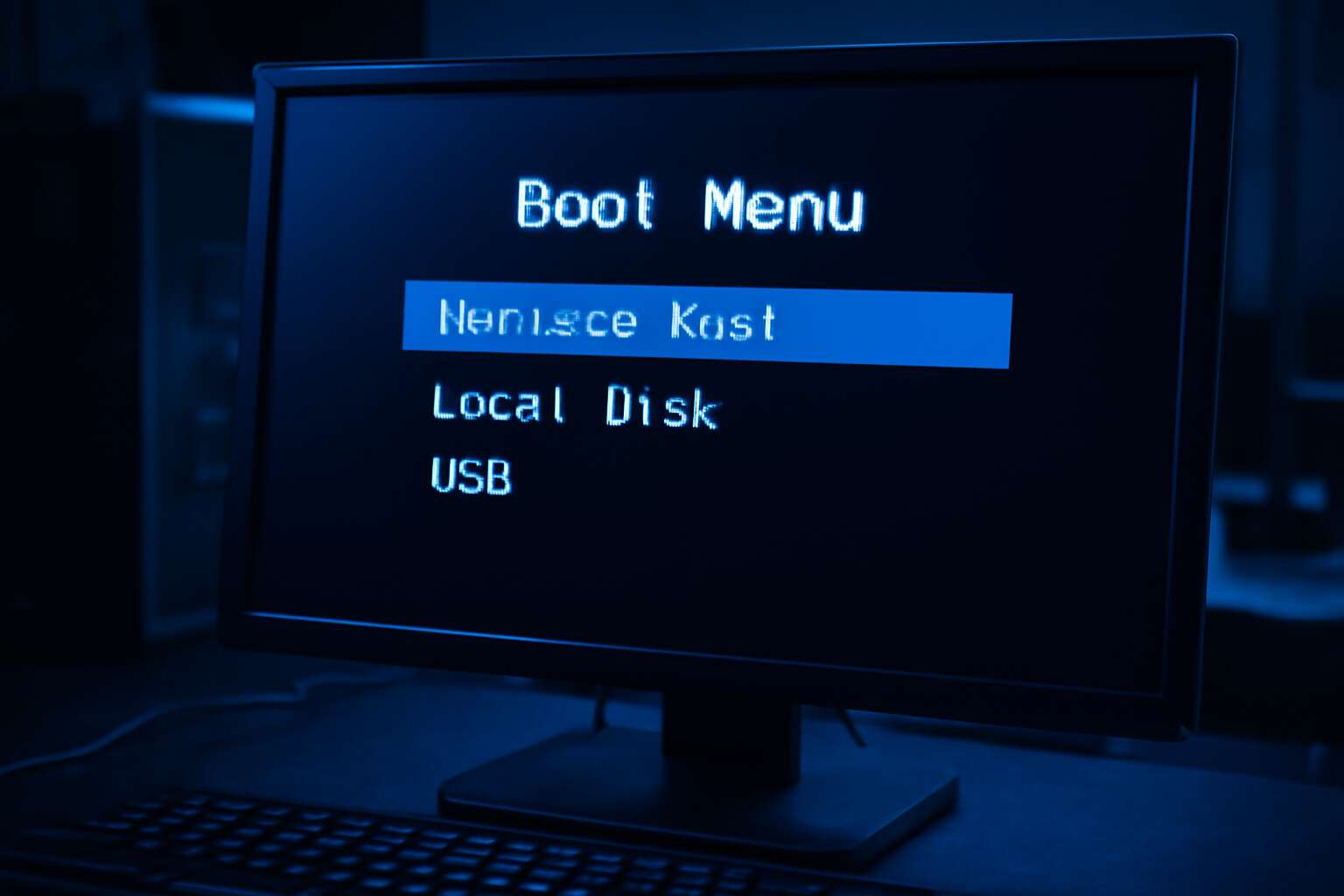
Thin client boot concepts
What is the thin client boot process
Boot time shapes mornings more than we admit. A recent study suggests up to 30% faster boot times with a well-configured thin client boot menu. In South Africa’s dynamic offices, those seconds translate into momentum rather than fatigue, turning a routine startup into a smooth, almost human welcome. The thin client boot process isn’t a single moment; it’s a choreography—firmware, network boot, and the careful handoff to the user session, a rhythm observed in countless South African teams.
- Network boot order and PXE actions
- Image selection and cache strategy
- Security postures and authentication prompts
Viewed through a human lens, the boot menu is a quiet manifesto of an organization’s priorities. It invites us to think about security, simplicity, and future-proofing as a single continuum. Done well, its subtle choices shape an end-user experience that feels effortless, almost human in its timing!
PXE and network boot fundamentals
Behind the curtain of the thin client boot menu, beloved in South Africa’s bustling offices, lies a brisk, almost chivalrous negotiation between devices and servers. PXE and network boot fundamentals temper firmware bravado into a punctual start, where a DHCP hello and a small TFTP fetch usher in the bootstrap and set the day in motion with quiet confidence.
Think of the sequence as a measured relay: the client shouts for boot services, the network glances toward a trusted source, and the bootstrap arrives ready to guide the session.
- DHCP negotiations locating the PXE service
- PXE-enabled boot ROM that speaks the network dialect
- TFTP or similar service delivering the bootstrap and image
Smart caching and tighter image reuse keep bandwidth in check and turn a cold start into a polite invitation to work. The result is a crisp, dependable rhythm that your users will barely notice.
Boot menu options explained
Speed is money in South Africa’s bustling offices, where every millisecond of startup counts. The thin client boot menu opens the day with a calm, deliberate choice that sets the tempo for the session ahead.
Options are straightforward and targeted: network boot for centralized images, local storage for testing, or maintenance paths that keep devices healthy. A well-structured menu reduces support calls and keeps users productive from the first click.
- Network boot for centralized images
- Local storage for testing or offline work
- USB boot for maintenance or recovery
- Diagnostics to verify firmware health
The menu layout favors consistency: clear labels, predictable order, and robust fallbacks that boot to a known good image if something goes wrong.
Handled well, it feels like a polite invitation to work.
Local vs network boot considerations
Speed is money in South Africa’s bustling offices. The thin client boot menu sets the tempo from the first keystroke, nudging users toward productivity.
Local storage shines for testing or offline work, while network boot centralizes images and simplifies updates.
- Centralized image management for consistency
- Faster patches and security updates across devices
- Streamlined troubleshooting with predictable baselines
Choosing between them depends on bandwidth, security, and control. A well-designed thin client boot menu blends both paths to keep South Africa’s offices productive from the first boot.
Configuring a thin client boot menu
Setting up BIOS/UEFI boot order
Across South Africa’s bustling offices, a slow boot costs more than a minute. Small delays add up, shaping the tempo of a workday and the mood in the room. Industry chatter suggests boot times influence user satisfaction by as much as 30%, and the thin client boot menu becomes the quiet difference.
Configuring a thin client boot menu is not about flashy features; it’s about a disciplined start. Setting up BIOS/UEFI boot order creates a reliable backbone, guiding devices from power-on to login with speed and security. When the boot sequence is predictable, teams move with confidence and focus.
In South Africa, power reliability and remote management make the boot menu a quiet hero, delivering stable provisioning and easier recovery when the network or hardware falters.
Enabling network boot in firmware
In South Africa’s offices, a five-second boot improvement can transform a morning. I’ve seen the thin client boot menu act as the quiet engine behind every login, delivering reliability when it matters most. Fast, predictable boots correlate with steadier workdays and calmer moods, especially in high-pressure environments!
Enabling network boot in firmware means devices pull their configuration from a central place, rather than chasing local updates. In practice, this keeps provisioning consistent and helps recover quickly if a device stalls or a network hiccup crops up. The firmware simply knows to start from the network, creating a backbone that teams can trust.
- Centralized provisioning
- Remote recovery
- Consistent configurations
But the magic lies in a disciplined start, a dependable rhythm that suits rural ICT teams chasing uptime and peace of mind. This menu, with its quiet reliability, stands as a trusted companion on the journey.
Customizing boot menu entries
Five seconds shaved from boot time become a morning ritual in South Africa’s busy offices, where every screen comes to life like a sunrise. Configuring a thin client boot menu lets us choreograph that awakening, turning a hasty start into a dependable cadence. We sculpt the menu to greet users with steady entry points and predictable outcomes, a quiet magic that reduces drift and confusion.
Key considerations to shape the experience:
- Set a clear default entry aligned with the primary workflow
- Tune the timeout to avoid frustrating waits
- Group related options into logical sections for quick recovery
When these lines are drawn with care, the boot becomes a reliable heartbeat across campuses and offices, and that thin client boot menu becomes the quiet backbone of everyday productivity for rural and urban South Africa.
Secure boot and policy settings
Across South Africa’s brisk office dawns, uptime is the lifeblood of every campus; the monitors wake and the day begins. The thin client boot menu acts as a quiet conductor, guiding users to their first note with clarity and grace.
- Enforce Secure Boot across all endpoints
- Define boot-time permissions and user access policies
- Enable tamper-evident audit trails for boot events
Secure boot and policy settings shape that awakening into a trusted routine. They enforce a zero-trust posture at startup, verify firmware integrity, and log every decision the system makes.
When these layers are sculpted with care, startups become predictable rhythms rather than mercurial gambits, and the workday in cities and hinterlands alike smiles back!
Troubleshooting boot menu configuration
Across South Africa’s campuses, startup rhythms hinge on the boot sequence. A surprising 40% of IT downtime stems from boot menu misconfigurations, a statistic that highlights how precision at power-on matters. Configuring a thin client boot menu becomes a quiet art—aligning firmware expectations with user needs and turning a potentially fussy wake-up call into a calm, predictable chorus.
- Boot order coherence across endpoints
- Policy and security alignment with firmware
- Audit trails and tamper-evidence for boot events
Troubleshooting that configuration, in this lyrical field of IT, invites a broad view: examine coherence between boot prompts and policy, verify firmware compatibility, and ensure network paths are accessible even when the network is busy. These high-level checks keep the thin client boot menu resilient, avoiding snags that ripple through classrooms and offices.
Common boot menu scenarios and use cases
Diskless workspace deployments
Diskless workspace deployments rely on a clear, scalable entry point—the thin client boot menu—’the quiet engine behind every reboot’—where every endpoint starts from a central image. In South Africa’s dynamic offices, this approach trims hardware costs, accelerates provisioning, and hardens security by removing local storage from the attack surface.
Common use cases unfold across branch offices, training environments, and customer-facing kiosks.
- Branch offices and remote sites with centralized images
- Education labs and training rooms that reimage on demand
- Kiosks and public-access terminals requiring controlled software
As IT teams map these scenarios, the boot menu becomes a quiet conductor—ensuring predictable reboots, consistent app delivery, and tighter security across the network!
Remote image provisioning
In South Africa’s fast-moving offices, every reboot is a potential bottleneck—and every minute counts. A recent metric notes that misconfigured boot sequences can sap up to 2 hours per quarter per site. The thin client boot menu stands as the quiet conductor of the network, shepherding devices to a single, trusted image and delivering remote provisioning with surgical precision. When users hit reboot, the process unfolds smoothly, security tightens, and drift fades into the background.
- Remote image provisioning for branch offices and remote sites
- On-demand reimaging for education labs and training rooms
- Controlled software deployment in kiosks and public terminals
These scenarios showcase how a central boot menu supports consistent app delivery, faster updates, and safer endpoints across a distributed South African workforce.
Workstation redundancy and failover
Across South Africa’s fast-moving offices, every reboot is a potential bottleneck; a tiny lever at startup can decide the fate of a busy day. The thin client boot menu acts as a steady conductor, routing devices to a trusted image and stitching together resilience with speed, so users wake to uptime rather than trouble.
- Workstation redundancy and failover to keep business services online even if a device fails.
- Automatic image switchover across branch sites for continuous operations.
- Centralized software deployment in kiosks and public terminals for safer endpoints.
With these scenarios, the boot menu becomes less about configuration and more about reliability, turning downtime into a rare guest in the networked workspace.
BYOD and mixed hardware environments
Momentum stalls in seconds, and in South Africa’s fast-paced offices, BYOD and mixed hardware demand a boot strategy that feels almost prescient! The thin client boot menu becomes a silent conductor, guiding diverse devices toward a trusted image with grace and speed.
Here are common use-case silhouettes that the boot menu illuminates:
- BYOD across laptops, tablets, and phones
- Unified image deployment to kiosks and public terminals
- Resilient fallbacks for remote or branch sites
The bottom line: this boot menu blends resilience with a human-centered approach, translating hardware variety into a single, dependable sunrise for the workspace. It isn’t about forcing sameness; it’s about welcoming diversity with a steady, performant image that wakes users to uptime rather than trouble.
Security, compliance, and maintenance of boot menus
Secure boot integration and updates
In the digital frontier, 76% of breaches begin at the endpoint, and the simple act of hardening the boot process can tilt the odds. A well-tuned thin client boot menu becomes a quiet sentinel—unseen, yet indefatigable—guarding the network during every startup.
Security, compliance, and ongoing maintenance are not afterthoughts; they are the backbone of a trustworthy environment. Secure boot integration and updates must live in sync with firmware signing, image provenance, and robust audit trails. Consider these pillars:
- Secure boot policy alignment with hardware vendors
- Signed and verified images for every deployment
- Change controls and immutable logging
Across South Africa, aligning with POPIA and industry best practice helps organizations stay compliant while assets stay protected. The discipline around the boot menu extends beyond hardware—it’s a promise to customers that uptime, data integrity, and privacy are safeguarded.
Access controls for boot options
Security, compliance, and ongoing maintenance anchor a healthy boot ecosystem. The thin client boot menu is the quiet sentinel that guards the network at every startup. With 76% of breaches beginning at the endpoint, a locked-down boot is not flashy, but indispensable. Alignment with policy, firmware signing, and robust audit trails creates a reputation for resilience that customers notice and regulators respect.
Access controls for boot options keep the door closed to tampering. The essentials are typically spelled out as:
- Role-based restrictions for viewing and altering boot entries
- Immutable logs that cannot be retroactively edited
- Provenance checks and signed images to verify deployment integrity
These measures weave compliance into everyday operations and ease audits across South Africa’s regulatory landscape.
Auditing and logging boot activity
Endpoint breaches climbed to 76% last year, turning the boot sequence into a frontline of defense. The quiet, unglamorous guard—the thin client boot menu—keeps firmware, policies, and boot entries aligned so startups stay trustworthy instead of suspect.
Auditing and logging boot activity are not mere paperwork; they map integrity in hard digits. Consider these elements for a robust trail:
- Time-stamped records
- Tamper-evident storage
- Centralized security dashboard
- Automated alerting on anomalies
Maintenance tasks stay in step with firmware updates, configuration drift, and policy changes. In South Africa’s regulatory landscape, tamper-resistant records and verified images support audits and regulator expectations. The menu evolves as part of a disciplined governance ritual, quietly reinforcing resilience at every startup.
Regular maintenance and patch cycles
In South Africa, endpoint breaches climbed to 76% last year, turning the boot sequence into a frontline of defense. The thin client boot menu acts as a quiet sentinel, aligning firmware, policies, and boot entries so startups stay trustworthy rather than suspect.
Security thrives on discipline and regulatory insight. SA’s environment values tamper-resistant records and verified images, shaping how the menu is architected and maintained. The result is a governance cadence that keeps essentials trustworthy at every power-on.
Maintenance is ongoing, not episodic. Regular firmware updates, image verification, and policy drift monitoring sustain resilience. Key tasks include:
- Firmware patch cadence
- Signed boot images
- Policy drift checks
These habits reinforce the thin client boot menu as a dependable gate across South Africa’s diverse hardware.
Backup and recovery planning
South Africa saw endpoint breaches climb to 76% last year, turning the boot sequence into frontline defense. The thin client boot menu acts as a quiet sentinel, aligning firmware, policies, and boot entries so every startup feels trustworthy from power-on!
Security and compliance shape every decision around this menu. Tamper-resistant records and verified images underpin governance, while ongoing maintenance keeps policies current and auditable across devices and sites.
- Backup strategy aligned with governance objectives
- Integrity checks and restore verification
- Audit trails for boot activity and image provenance
Across South Africa, this approach sustains resilience amid diverse hardware and network conditions.

0 Comments